Marketing Memes, Jokes & Humor: What Actually Works in 2026
Written by LSLachezar Simeonov, Fractional CMO and growth marketer, in marketing since 2014 across SEO, paid media and marketing analytics.

Why marketing humor works, the memes and jokes marketers actually share in Slack, and how parody songs turn shared pain into a brand people remember.
Marketing humor is the cheapest distribution channel nobody wants to put on the roadmap.
It does not need a budget line. It does not need a creative agency. It does not need a 14-slide deck explaining the funnel. It just needs one marketer, somewhere, recognizing their own life in your post and hitting share before their coffee gets cold. That is the whole engine. And yet most brands still treat humor like a garnish - something you sprinkle on a "real" campaign once the serious work is done.
This post is about why marketing humor works, why most attempts at it land like a wet sock, and how three specific formats - memes, jokes, and parody songs - keep showing up in the feeds of the people you actually want to reach. I will use my own marketing parody songs as the worked example for the third one, because that is the format I know best and the one that taught me the most about what actually travels.
Why Marketing Humor Works (And Why It Usually Does Not)
Humor in marketing works for one boring reason: it is the fastest possible signal of in-group membership. When you make a joke about attribution being a polite fiction, every marketer who has ever stared at a multi-touch model nods. The non-marketer scrolls past. You just sorted your audience for free.
That is the upside. The downside is that most "brand humor" is written by people who have never actually been in the in-group they are joking about. They reach for the safe reference (coffee, Mondays, the printer) and produce a post that any brand in any industry could have written. Generic humor is worse than no humor. It signals that you do not know who you are talking to, which is the one thing humor is supposed to prove you do.
Three principles travel across every format below:
- Specific beats clever. "Our SDR team uses 14 tools and somehow still misses follow-ups" lands. "We love sales" does not.
- Punch up, never down. Make fun of the system, the budget owners, the absurd KPIs - never the intern, the user, or the underpaid coordinator stuck implementing the brief.
- Earn the laugh by naming the pain first. Humor without recognition is just noise. Recognition without humor is just a complaint. You need both.
Marketing Memes: The Format That Refuses to Die
Memes are the workhorse of marketing humor in 2026. They outperform polished creative on LinkedIn and X for the same reason a sticky note outperforms a slide deck: they are fast, they are recognizably human, and they do not pretend to be anything other than a joke.
A few archetypes that keep working:
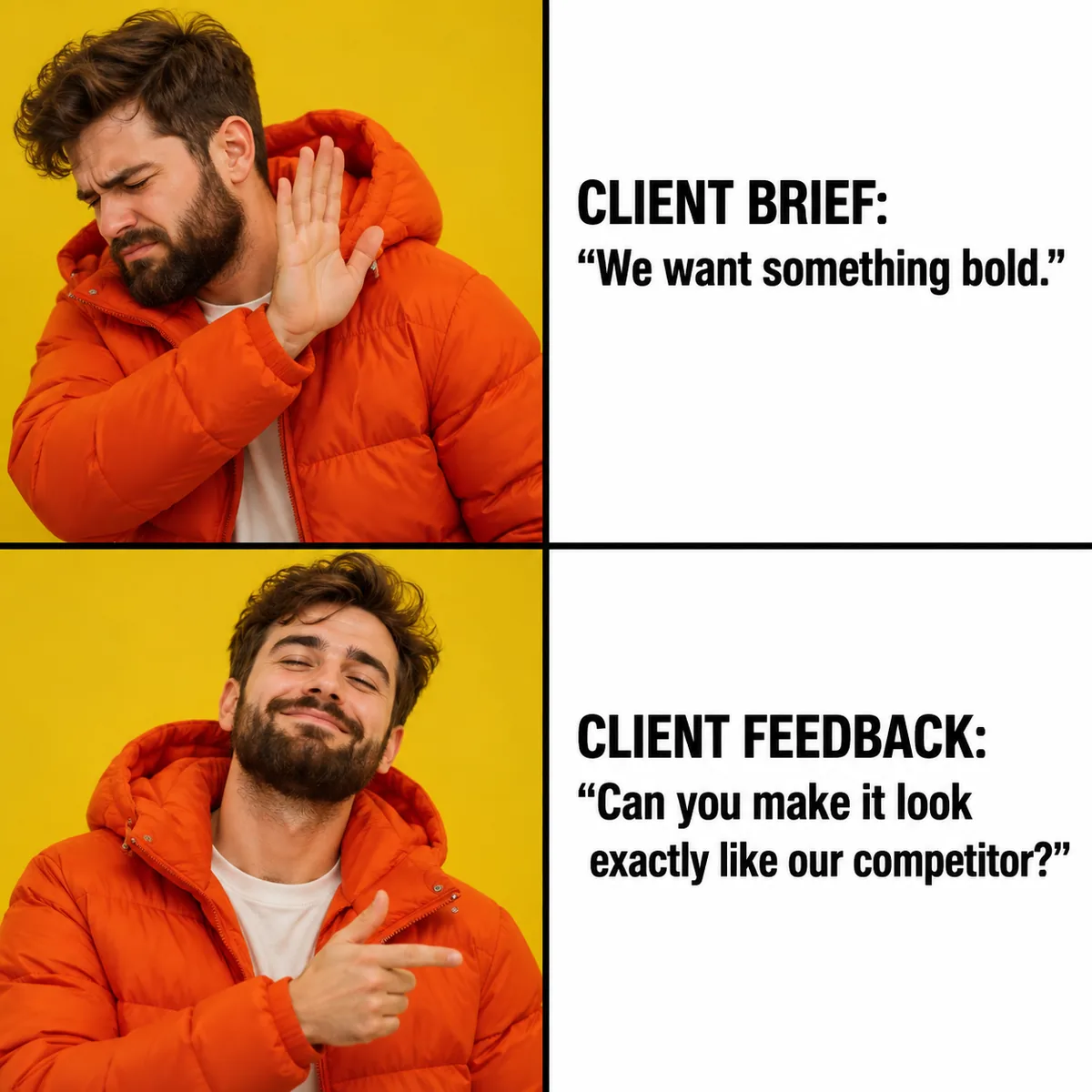
- The "agency vs client" meme. Two-panel format. Top panel: what the client said in the brief. Bottom panel: what the client meant. Works because every agency person has lived it.
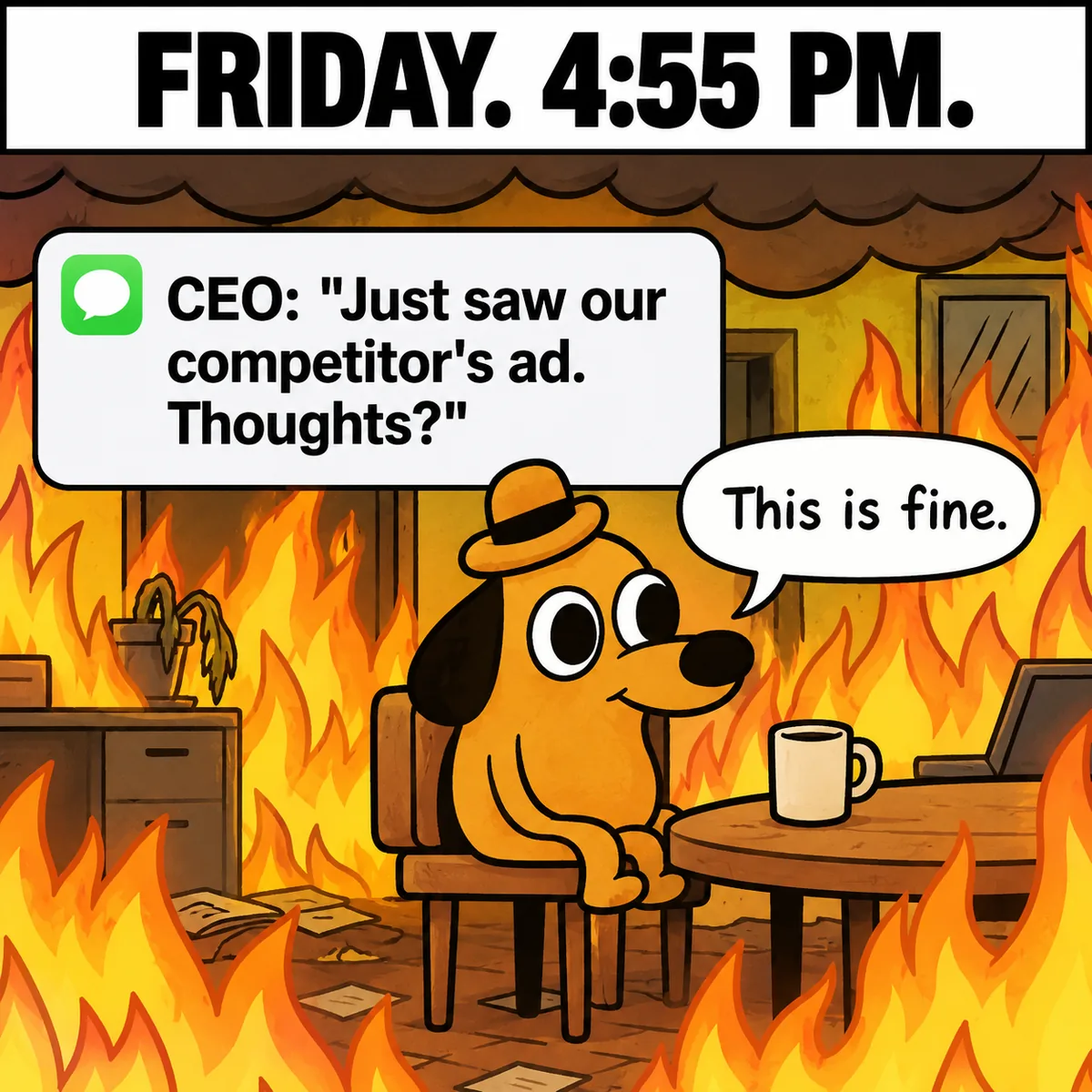
- The "Friday at 4:55 PM" meme. A request lands at the worst possible time. Marketing variant: the CEO sees a competitor ad and forwards it with "thoughts?". Works because of the shared dread.
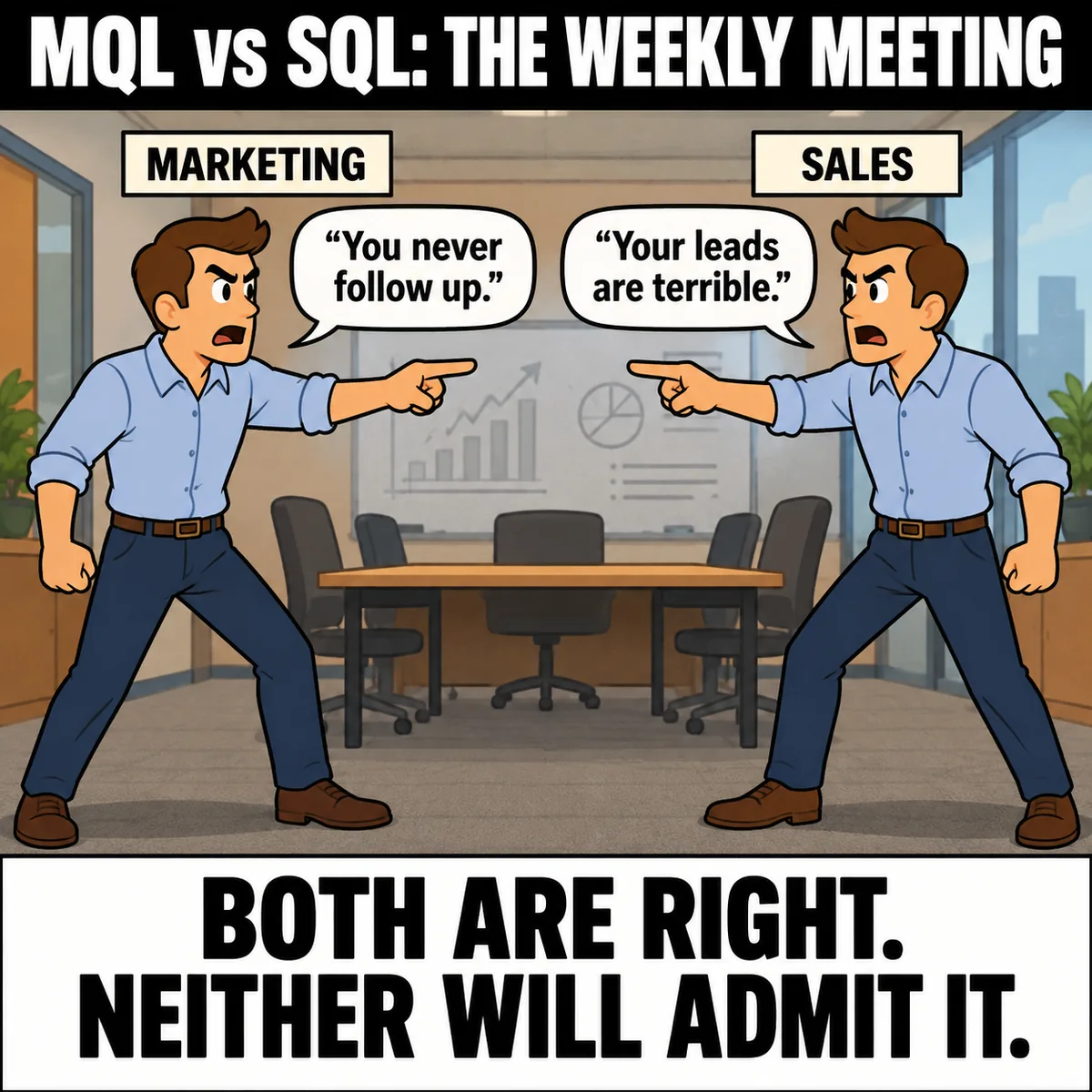
- The "MQL vs SQL" meme. Sales says the leads are bad. Marketing says the follow-up is bad. Both are correct. Both refuse to admit it. Works because it is the eternal war.
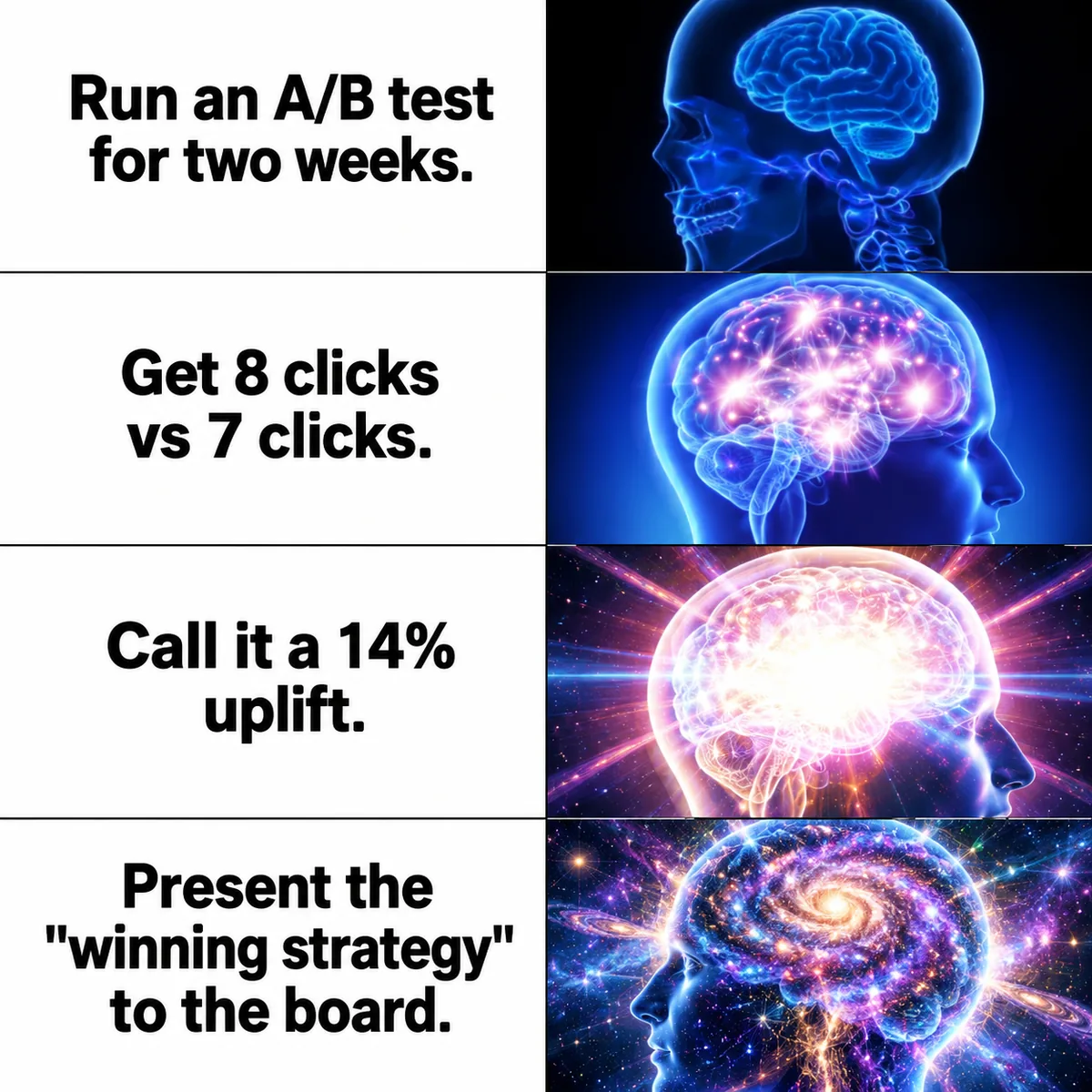
- The "we ran an A/B test for two weeks" meme. The result is statistically meaningless. Someone presents it anyway. Works because everyone has done this and pretended otherwise.
When memes hurt the brand: when they are recycled (you can feel it), when they are sanitized by legal until the joke is gone, or when the brand is making fun of the people it sells to. The line is not subtle. If your customer would feel embarrassed sharing your meme to their boss, you got it wrong.
Marketing Jokes: From Conference Stages to Slack Channels
Jokes are harder than memes because they have to survive without a visual crutch. A joke that lands in a Slack channel between two marketers has to do everything in one line. The structure that keeps showing up:
Setup that everyone in the audience has lived. Twist that names the absurdity out loud.
A few that have earned their keep:
- "Our quarterly plan is whatever the CEO read on the flight back from the offsite."
- "We don't have a funnel. We have a colander."
- "The dashboard is green. Revenue is not. These two facts are unrelated."
The reason most "marketing humor" accounts on X plateau is that they keep reaching for the same three setups (Mondays, meetings, agencies) without ever moving on to the harder, more specific pain. The accounts that grow are the ones that name a specific subspecies of marketing pain - performance marketers and their CAC, content marketers and their attribution debates, demand gen and their MQL targets - and stay there long enough to become the place that pain lives online.
If you want your marketing jokes to survive a quote-tweet, write them so a marketer can forward them to their boss as a joke and to their therapist as evidence. Both readings should be true.
Marketing Parody Songs: Turning Shared Trauma Into a Hook
This is the format I bet on with Clicks & Swagger. The thesis is simple: marketers already share memes and jokes about their pain in text. Audio is the format almost nobody is doing - and audio is sticky in a feed that is otherwise wall-to-wall text and screenshots.
A worked example: A/B Test Shanty. The premise is that running an A/B test feels like a slow sea voyage where the captain promises land any day now and the crew runs out of rum first. Every marketer who has ever waited eight weeks for statistical significance on a button color recognizes the boat. The shanty form lets the joke breathe across three minutes instead of one line, and the chorus is the part that gets stuck in someone's head on a Tuesday afternoon.
Why this works as marketing humor:
- Audio survives the scroll. A 15-second clip on LinkedIn beats a paragraph because it forces the brain to slow down for a beat instead of skim-and-bounce.
- The hook does the distribution for you. A line like "we'll know by Q3, lads" is easier to quote in a Slack channel than a 400-word post.
- A song is a permission slip. People who would never share a complaint about their job will gladly share a song about it, because the song lets them keep plausible deniability. They are sharing a joke, not airing grievances.
If you want to see the full catalogue of marketing parody songs, it is the same playbook applied to attribution, performance reviews, deck reviews, and roughly 20 other industry-standard nightmares. And if you have a specific pain that deserves the treatment, you can commission a song and have someone else turn it into a hook for you.
How to Write Marketing Humor That Does Not Get You Fired
Three rules I would put on a sticky note above your monitor:
1. Punch up, never down. Make fun of the budget, the dashboard, the offsite, the deck. Never the user, the intern, or the customer.
2. Be specific enough that a generalist would not get it. If a finance person can read your post and laugh, you wrote it for the wrong audience.
3. Test on five marketers before posting. Not five colleagues. Five marketers in different companies. If three of them just say "haha nice" and one of them forwards it unprompted, post it. Otherwise rewrite.
The last rule is the one most brands skip and the one that costs the most. The marketers who actually share content are not polite about it. Silence is the data. A genuine forward is the only signal that matters.
How to Use Humor in Marketing (Without Making It a Gimmick)
Knowing that marketing humor works is the easy part. Placing it inside an actual campaign is where most teams stall. A few placements that reliably survive contact with a brand team:
- Top of funnel, always. Humor buys attention from people who owe you none. Put it in social, newsletters, and ads - not in your pricing page.
- Onboarding and lifecycle email. A single self-aware line in a welcome sequence does more for brand warmth than a paragraph of values copy.
- Sales enablement. A meme that names the buyer's pain gets forwarded internally by the buyer. That is distribution you cannot buy.
- Audio and video. The format nobody is using. A parody song about the same pain travels further than the tenth screenshot of the same joke, because it is the only version of it your audience has heard.
The gimmick test is simple: if you removed the joke, would the message still be true? If yes, the humor is a delivery mechanism and it will work. If no, you wrote a bit, not a campaign. That distinction is the whole game, and it is the same instinct behind turning marketing pain into songs in the first place.
If the audio angle is what interests you, AI music as a marketing tool covers the production side - cost, limits, and how it fits into a sonic brand.
FAQ: Marketing Humor
What counts as marketing humor?
Anything that uses comedy - memes, jokes, parody, satire, sketches, songs - to comment on the work, the tools, the buyers, the budgets, or the absurdities of doing marketing for a living. The audience is other marketers, not the end consumer.
Does marketing humor actually drive pipeline?
Not directly, and you should not pretend it does. What it drives is recognition, share-of-voice in the only feeds your buyers actually read for fun, and a specific kind of trust that says "we know what your job is really like." That trust converts later, on a different channel, and your attribution model will give the credit to a branded search. So it goes.
Where do marketers share humor most in 2026?
LinkedIn for the long-form jokes and screenshots, X for the one-liners, Slack DMs for everything they cannot post publicly, and increasingly TikTok and YouTube Shorts for video and audio formats. If you are only on one of these you are leaving most of the laugh-share on the table.
Is AI-generated humor any good?
On its own, no. AI is fluent and unfunny - it knows the shape of a joke without ever having sat through a deck review at 6 PM on a Friday. AI as a co-writer with a marketer who has lived the pain, and as a production tool for things like parody songs that would otherwise take a studio? That is where it earns its keep. The joke still has to come from someone who was in the room.
If you want more of this, why I started making songs about marketing is the origin story for how this whole project got off the ground. Or just go listen to the latest parody song and forward it to the marketer in your life who needs it most.


